Hand of Anubis: Hacksaw’s Egyptian Cluster Slot With Two Underworld Bonuses and Zero Patience
Hand of Anubis: Hacksaw’s Egyptian Cluster Slot With Two Underworld Bonuses and Zero Patience
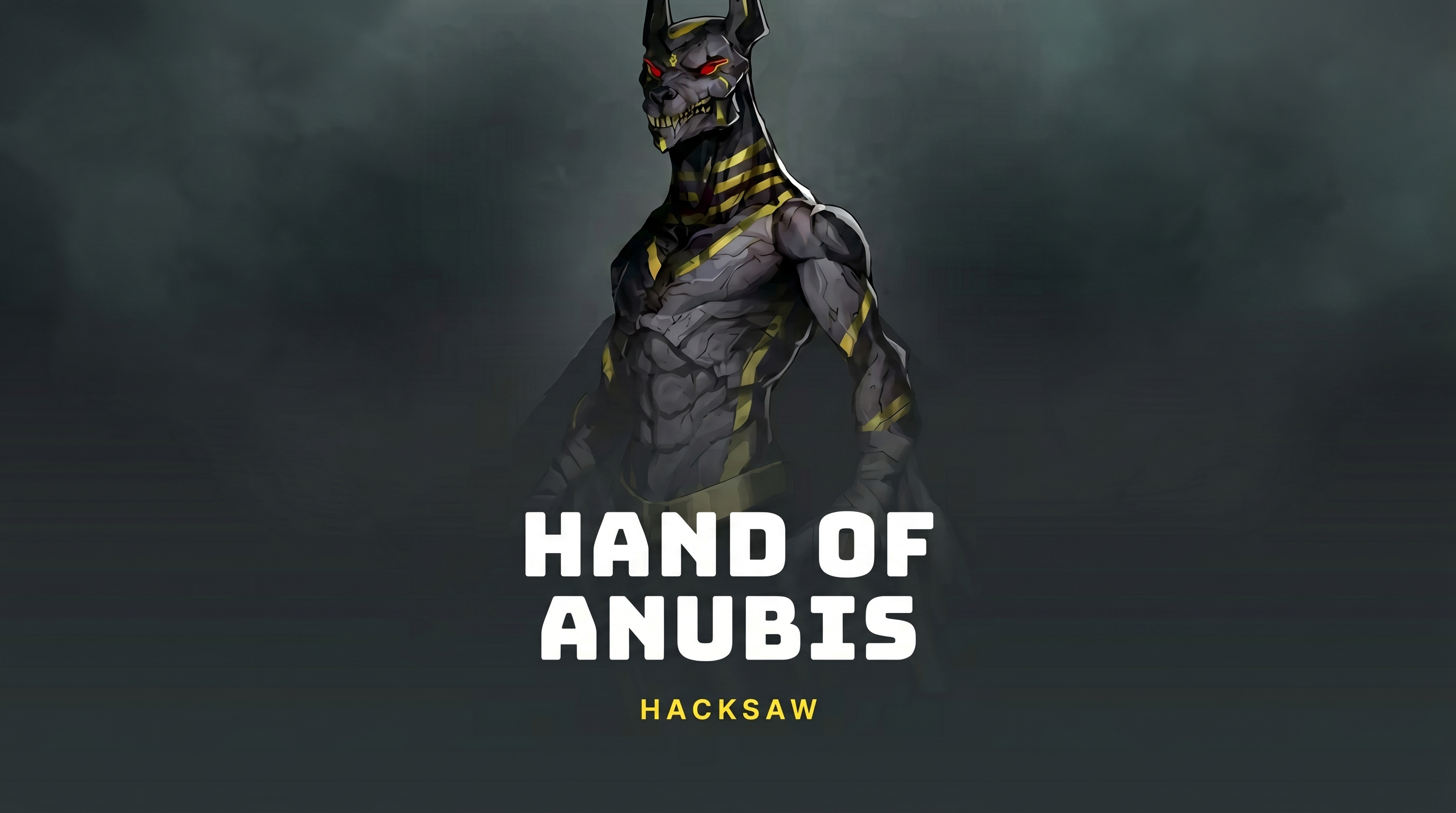
Hand of Anubis is the rare slot that makes cluster pays feel mean on purpose. The board is tall, the palette is sand-and-blood serious, and the feature set splits into two different bonus philosophies — one obsessed with growing multipliers, the other with judgment-day chains — so repeat players stop treating “bonus” like a single noun.
If you already survived Chaos Crew, you know Hacksaw’s sermon: base games are filters, bonuses are where the studio spends its budget. If you want a softer cluster night after Anubis punishes you, Sweet Bonanza is the obvious candy detour — same tumble muscle, totally different temperament.
MonkeyTilt’s on-game sticker for this build reads 96.2% RTP, 3.76% house edge, and volatility of 3/5. Bonus buys and FeatureSpins may list alternate RTP lines; this article mirrors the default configuration shown in your client.
Clusters, gravity, and the red/blue multiplier language
Hand of Anubis runs a cluster format on a tall grid (commonly five columns by six rows in public sheets — verify locally). Wins form when enough matching symbols connect horizontally or vertically into a single blob; winning tiles vanish, new symbols drop, and chains continue until the board stalls.
The signature base-game hook is the orb pair: red and blue multiplier orbs that increase global multipliers when their respective colours win — think of it as two thermometers arguing over the same tumble sequence. When both colours participate, wins can multiply by both values in the configuration described in help — that interaction is the difference between “pretty cascade” and “accounting event.”
Spend your first demo session answering boring questions: minimum cluster size per symbol tier, whether wilds participate in colour multipliers, and how often orbs increment in the base game versus inside each bonus.
Because clusters reward surface area, the tilt trap is chasing “almost connected” premium blobs that never close. A cleaner discipline is to pick a stake step from your worst demo drought between features, not from the one tumble that looked cinematic.
Judgment vs Underworld — two bonuses, one brutal paytable
Landing three bonus symbols (confirm artwork per build) typically routes you to a picker between two free-spin modes:
- One mode leans Judgment: public copy describes increasing multipliers tied to successful tumble chains — the bonus rewards momentum and punishes dead air.
- The other mode leans Underworld: marketing materials talk about special symbols that collect values, grow stacks, or interact with multipliers across the grid — the bonus rewards setup and timing.
Exact names, symbol caps, and retrigger rules live in the help file — slot tourism blogs love to paraphrase them wrong.
Retriggers and extra spin mechanics (where present) can turn a 3/5 volatility read into a real swing if the picker blesses you with the mode that matches your bankroll.
If you are new to dual-bonus slots, run five forced entries in demo on each mode and log average exit multiplier and frequency of dead bonuses. You are not hunting “which mode is better forever”; you are learning which mode matches your risk appetite tonight.
Buys, pacing, and the Hacksaw honesty policy
Where legal, Hand of Anubis often includes direct bonus access and sometimes FeatureSpins™ that force orb or scatter behaviour for a priced premium. Treat each purchase as its own RTP product — the base 96.2% line is not a promise about a 200x buy.
If your jurisdiction hides buys, ignore the shop entirely and plan sessions around natural entry frequency you measure in demo.
Lobby neighbours worth A/B testing
Le Bandit keeps Hacksaw’s meter obsession but trades Egypt for heist comedy. Gates of Olympus is the Pragmatic answer to “big grid + multipliers,” but Anubis is narrower, darker, and less interested in orb candy visuals.
Wanted Dead or a Wild 2 belongs in the same evening if you want duel multipliers after cluster multipliers — different grammar, same stop-loss requirements.
Bankroll notes for 3/5 on a tall grid
Volatility of 3/5 still permits long tumble droughts; the 3.76% house edge print is a reminder that the operator slice is real and comped drinks do not exist online. Size bets assuming you will whiff both bonuses in a session — anything else is optimism.
Colour-tracking superstition — “red is due” — is how humans lose money while RNG shrugs. The orbs respond to winning clusters of that colour, not to your emotional ledger. Treat colour as mechanics, not mood.
Who should kneel — and who should walk away
Hand of Anubis suits players who like cluster planning, dual-feature slots, and bonuses that feel like different games. It punishes players who chase “one more spin until colour balance” — the board does not owe you symmetry.
When the orbs climb, the tumbles chain, and the picker finally sends you into the mode that matches your rhythm, Hand of Anubis delivers the thing Hacksaw sells best: ritual, tension, and a paytable that still feels personal even when the RNG is not.
Related Posts

Wild Easter Eggs: Expanse Studios’ Seasonal Reel That Plays Like a Spring Break From Variance Theatre
A seasonal Easter skin keeps variance modest enough to feel like a spring break from ultra-volatile headline slots. We cover symbol pays, feature lightness, and …

Vendetta Fury: Degen’s Alley War Where Two Wild Species Draw Zones, Beams, and a Shared Grudge Multiplier
Two wild factions paint zones and beams across the grid while a shared grudge multiplier escalates the alley war. This explains zone drawing, beam interactions, …
The Luxe: Hacksaw’s Black‑and‑Gold Room Where Frames, Jackpots, and Clover Sweeps Run the Night
Black-and-gold art frames a room where jackpots, clover sweeps, and framed zones steer the night’s volatility. We dissect frame features, jackpot layers, and Hacksaw’s luxury …
The Lost Book of Mummy’s Curse: A “Book of” Tomb Trip With Trusty’s Cartoon Charm
Trusty’s cartoon mummy wraps classic expanding-symbol “book” grammar in a tomb caper with lighter art than grim competitors. Expect book mechanics, expanding symbol flow, and …