Duck Hunt 500: AvatarUX’s Arcade Crosshair Slot That Turns “Shoot the Duck” Into a Bonus Economy
Duck Hunt 500: AvatarUX’s Arcade Crosshair Slot That Turns “Shoot the Duck” Into a Bonus Economy
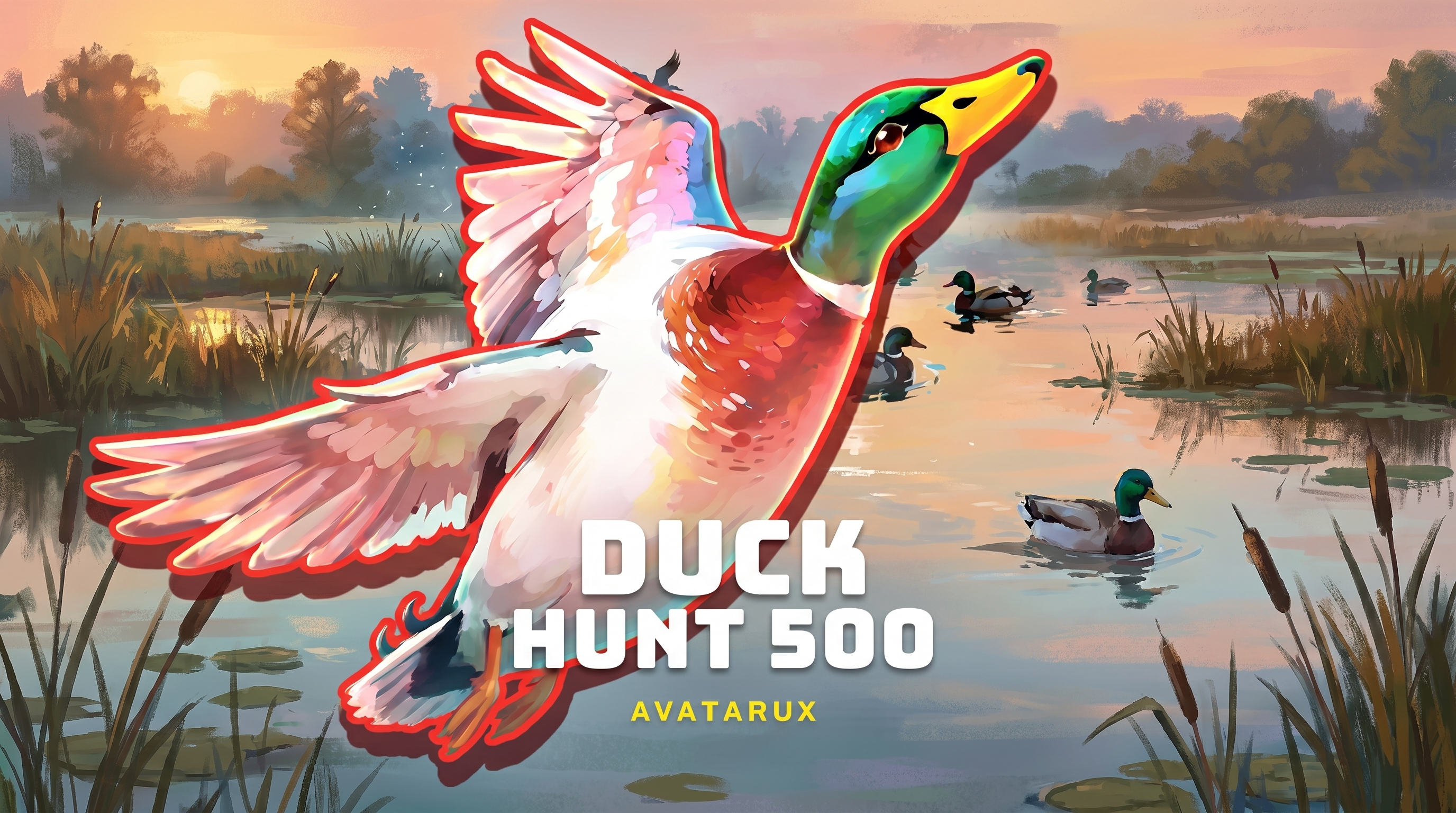
Duck Hunt 500 is AvatarUX’s love letter to cabinet muscle memory: neon marsh, crosshair collect, and a bonus loop that asks whether you are hunting cash ducks, multiplier ducks, or the dog that finally pays rent. The base game is five-by-four with twenty paylines in public marketing — enough structure to feel like a slot, enough spectacle to feel like an arcade cabinet wearing one.
If you already read Bigger Bass Bonanza or Big Bass Splash, you already speak collect-feature as a second language — Duck Hunt 500 swaps fishermen for shotguns and float symbols for crosshair math.
MonkeyTilt’s on-game sticker for this build reads 96.1% RTP, a 3.93% house edge, and volatility of 3/5. Ante bets and feature buys (where legal) may list separate RTP lines; this article mirrors the default base configuration shown in your client.
Hunter’s Shot — crosshair math without pretending it is “skill”
Hunter’s Shot is the signature: a crosshair can land on the grid and collect visible duck symbols for instant credit prizes in public sheets. The mechanic is spectacle-first — you will remember the animation even when the ticket disappoints.
Spend your first demo session answering three questions from the paytable: how often the crosshair fires in base, whether multiple crosshairs can coexist, and whether collected values respect line bet scaling the way you assume. Misreading any of those three details is how 3/5 games still feel 5/5 expensive.
Free spins — cash ducks, multiplier ducks, and the dog that matters
Marketing copy for Duck Hunt 500 describes a free spins economy where cash ducks and multiplier ducks interact — multipliers applying to collected values is the headline promise — plus a dog bonus symbol that behaves like a wild multiplier in public blurbs. Exact trigger counts, retrigger rules, and cap language belong in help, not in a blog paraphrase.
Treat the bonus like Bigger Bass with crosshair seasoning: the drama is whether collectors and multipliers line up on the same spin, not whether the ducks are cute.
Ante and buys — pay for frequency, not for “fairness”
AvatarUX titles often ship ante toggles that trade stake for feature frequency and optional bonus buys where regulators allow. Compare purchased RTP to the base 96.1% line before you treat a buy as “the real game.”
Why the arcade skin is not “just marketing”
Duck Hunt 500 sells crosshair fantasy because collectors need spatial clarity: you must instantly see which ducks are in scope, which multipliers are live, and whether the dog is doing cosplay or work. That clarity is also what makes losses sting — the UI promises you were close because the reticle hovered the wrong row.
Cross-lobby comparisons
Against Chicken Rush, Duck Hunt 500 is busier visually — both are animal + collect comedy, but AvatarUX leans harder into arcade HUD language.
Against Sweet Bonanza, this is line-slot discipline versus scatter chaos — different bankroll habits, same need for paytable literacy.
Chaos Crew is the wrong neighbour if you want marsh humour — save that for when you are ready for neon punishment.
Big Bass Splash and Big Bass Bonanza are useful collect references if you want to compare instant collect against spin-until-man economics — different studios, same feature literacy requirement.
Session playbook — two bonuses, honest notes
Run two free-spin samples in fun balance and write down three numbers after each: largest single win, number of dead spins inside the bonus, and whether multipliers overlapped collectors. If your notes show pretty animations and thin tickets, that is still valuable — it tells you whether this game is entertainment tax or bonus chase for your personality.
Bankroll truth for 3/5 hunting
Volatility of 3/5 with 3.93% edge is honest middleweight math — you can still bleed through dry bonus chases if you chase crosshair dopamine on max bet. Size stakes for empty marsh stretches, not for the one clip where three multipliers kissed the same collect.
Turbo makes crosshair games feel like slot machines crossed with FPS — fun until you stop seeing ticket size. Manual cadence keeps receipts legible.
If you are comparing providers on the same night, Chicken Rush versus Duck Hunt 500 is a fair A/B: both lean on comedy animals and feature cadence, but AvatarUX’s HUD language pushes you toward arcade literacy faster than a calmer cartoon skin might.
Who should load shells
Duck Hunt 500 suits players who want line slots, collect features, and bonuses where multiplier alignment matters more than symbol art. It punishes anyone who thinks retro branding implies retro variance — 3/5 still bites.
When the crosshair finally parks on the right duck and the ticket prints like cabinet nostalgia earned its keep, Duck Hunt 500 proves AvatarUX can sell humour without hiding the spreadsheet underneath.
İlgili Yazılar

Wild Easter Eggs: Expanse Studios’ Seasonal Reel That Plays Like a Spring Break From Variance Theatre
A seasonal Easter skin keeps variance modest enough to feel like a spring break from ultra-volatile headline slots. We cover symbol pays, feature lightness, and …
Vendetta Fury: Degen’s Alley War Where Two Wild Species Draw Zones, Beams, and a Shared Grudge Multiplier
Two wild factions paint zones and beams across the grid while a shared grudge multiplier escalates the alley war. This explains zone drawing, beam interactions, …
The Luxe: Hacksaw’s Black‑and‑Gold Room Where Frames, Jackpots, and Clover Sweeps Run the Night
Black-and-gold art frames a room where jackpots, clover sweeps, and framed zones steer the night’s volatility. We dissect frame features, jackpot layers, and Hacksaw’s luxury …
The Lost Book of Mummy’s Curse: A “Book of” Tomb Trip With Trusty’s Cartoon Charm
Trusty’s cartoon mummy wraps classic expanding-symbol “book” grammar in a tomb caper with lighter art than grim competitors. Expect book mechanics, expanding symbol flow, and …