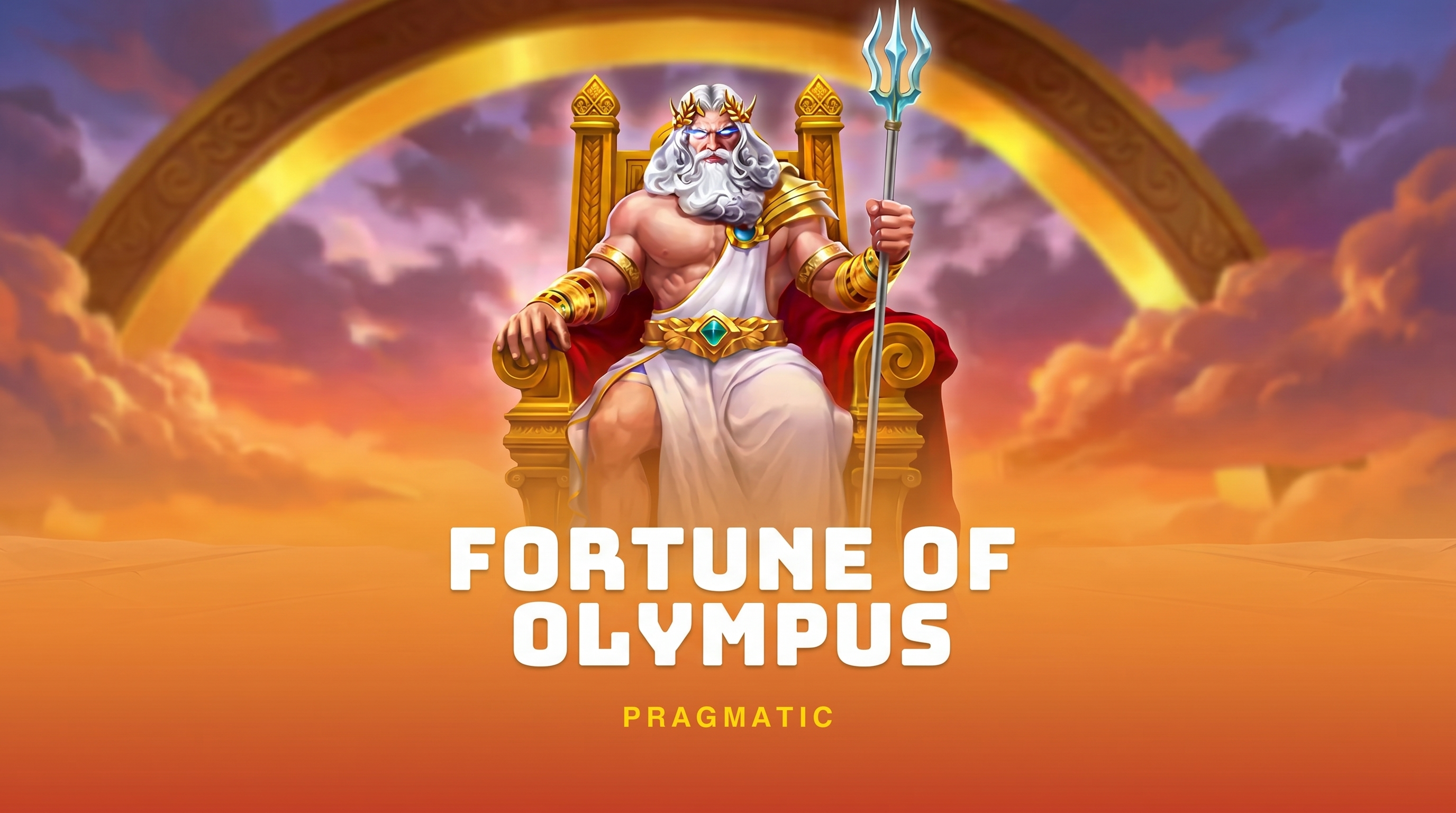
Fortune of Olympus: Pragmatic’s Seven-by-Seven Cluster Reboot of the Zeus Multiplier Religion
Fortune of Olympus: Pragmatic’s Seven-by-Seven Cluster Reboot of the Zeus Multiplier Religion
Fortune of Olympus is the moment Pragmatic Play stopped pretending the Olympus series had to stay on a six-by-five scatter-pays grid. This entry is a seven-reel, seven-row cluster slot: connect five or more matching symbols horizontally or vertically into a single blob and the game pays. Wins tumble — symbols vanish, gravity refills the holes, and new connections can chain until the board runs dry. If you already speak Gates of Olympus or Sweet Bonanza, the tumble muscle memory transfers instantly; the learning curve is mostly geometry (bigger grid, cluster rules instead of “anywhere pays” thresholds).
MonkeyTilt’s on-game sticker for this build reads 96.6% RTP, a 3.45% house edge, and volatility of 3/5 — squarely in Pragmatic’s “respect the swings” band. Ante bets, super spin modes, and bonus buys (where legal) may print separate RTP lines; this article mirrors the default base configuration shown in the client at publish time, not every jurisdictional variant.
Multipliers that stack to absurdity — then tumble away
Fortune of Olympus keeps the franchise’s favourite toy: multiplier symbols that land with printed values and detonate at the end of a tumble sequence. Public sheets describe values from 2x up to 500x; when several multipliers participate in the same tumble chain, their values add together and boost the total win for that chain. That “sum at the end” behaviour is why a quiet grid can suddenly snap awake — you are not watching line hits; you are watching surface area plus orb timing.
Premium symbols in official copy include the usual Greek props — goblets, helmets, rings, bolts — while gem shards pay the smaller cluster tiers. Spend ten minutes in demo mapping minimum cluster sizes per tier; cluster games punish guessing. Zeus still lurks as set dressing and random injection depending on build, but the real story is board coverage: a premium cluster that wraps through the centre beats a scatter of royals hugging the frame.
Free spins — where the multiplier becomes a savings account
Four to seven scatter symbols trigger the free spins game with 15, 20, 25, or 30 spins respectively in Pragmatic’s public documentation — always confirm locally because regional SKUs love to tweak counts. The headline twist is the persistent total multiplier: whenever a multiplier symbol lands on a winning free spin, its value feeds a running meter that does not reset between spins. Later tumbles do not just add fresh multipliers — they stack history on top of new geometry.
Retriggers follow the same scatter ladder: another four to seven scatters inside the feature awards the same 15–30 spin packet again. That rule matters for session planning — a deep bonus is not “ten spins and pray”; it can snowball if the scatters cooperate.
Official marketing cites a 10,000x style ceiling for the title — treat it like museum signage. Your lived experience will mostly be clusters that almost connected, multipliers that landed one tumble too late, and the occasional round where the total multiplier and a fat premium blob finally shake hands. That is normal; it is also why demo exists.
Special bets, super spins, and the instant-gratification menu
Pragmatic shipped Fortune of Olympus with a busy optional bet layer. Marketing descriptions mention double ante paths — one path skews harder toward natural free spins, another skews toward super free spins — plus super spin modes that guarantee multiplier presence each spin, with the pricier tier enforcing a minimum multiplier value (public copy cites floors like 50x on the premium super mode). There are also bonus buy tiers: a standard free spins purchase and a super purchase that enforces richer multiplier floors.
Treat every optional mode like a separate product with its own price, RTP stamp, and variance. If your jurisdiction hides buys entirely, none of this paragraph matters mechanically — you will grind gates the old-fashioned way.
How it sits next to Gates, Athena, and the candy aisle
Against Gates of Olympus, Fortune of Olympus is the cluster-native cousin: more local connectivity, more emphasis on blob shape, same multiplier religion. Against Wisdom of Athena, another Pragmatic grid favorite, Fortune skews harder toward Zeus iconography and the persistent multiplier bank during bonuses rather than Athena’s own modifier dialect — cousins, not clones.
If you need a palate cleanse that still rewards tumble literacy, Fruit Party keeps the cascade language with a totally different skin.
Cluster boards also reward spatial patience: chasing a “almost L-shape” premium cluster is how humans lose money while computers shrug. A cleaner discipline is to decide your bet step from worst-case tumble droughts, not from the one screenshot where Zeus smiled.
Who should climb — and who should stay at sea level
Fortune of Olympus is for players who want big-board cluster planning, tumble chains, and a free-spin round where one good multiplier ladder can print the entire session. It is a poor match for anyone allergic to empty tumble boards or convinced Zeus “owes” them after a cold hour — the 96.6% RTP label is a long-horizon statistical description, not a countdown timer.
Bankroll the same way you would any 3/5 Pragmatic flagship: stake for dead clusters, celebrate connected premiums, and never chase super buys after a loss unless you are comfortable lighting money on fire for theatre. When the total multiplier finally matches a fat cluster and the tumble will not quit, Fortune of Olympus earns its shelf space — same god, new grid, sharper math.
İlgili Yazılar

Wild Easter Eggs: Expanse Studios’ Seasonal Reel That Plays Like a Spring Break From Variance Theatre
A seasonal Easter skin keeps variance modest enough to feel like a spring break from ultra-volatile headline slots. We cover symbol pays, feature lightness, and …

Vendetta Fury: Degen’s Alley War Where Two Wild Species Draw Zones, Beams, and a Shared Grudge Multiplier
Two wild factions paint zones and beams across the grid while a shared grudge multiplier escalates the alley war. This explains zone drawing, beam interactions, …
The Luxe: Hacksaw’s Black‑and‑Gold Room Where Frames, Jackpots, and Clover Sweeps Run the Night
Black-and-gold art frames a room where jackpots, clover sweeps, and framed zones steer the night’s volatility. We dissect frame features, jackpot layers, and Hacksaw’s luxury …
The Lost Book of Mummy’s Curse: A “Book of” Tomb Trip With Trusty’s Cartoon Charm
Trusty’s cartoon mummy wraps classic expanding-symbol “book” grammar in a tomb caper with lighter art than grim competitors. Expect book mechanics, expanding symbol flow, and …